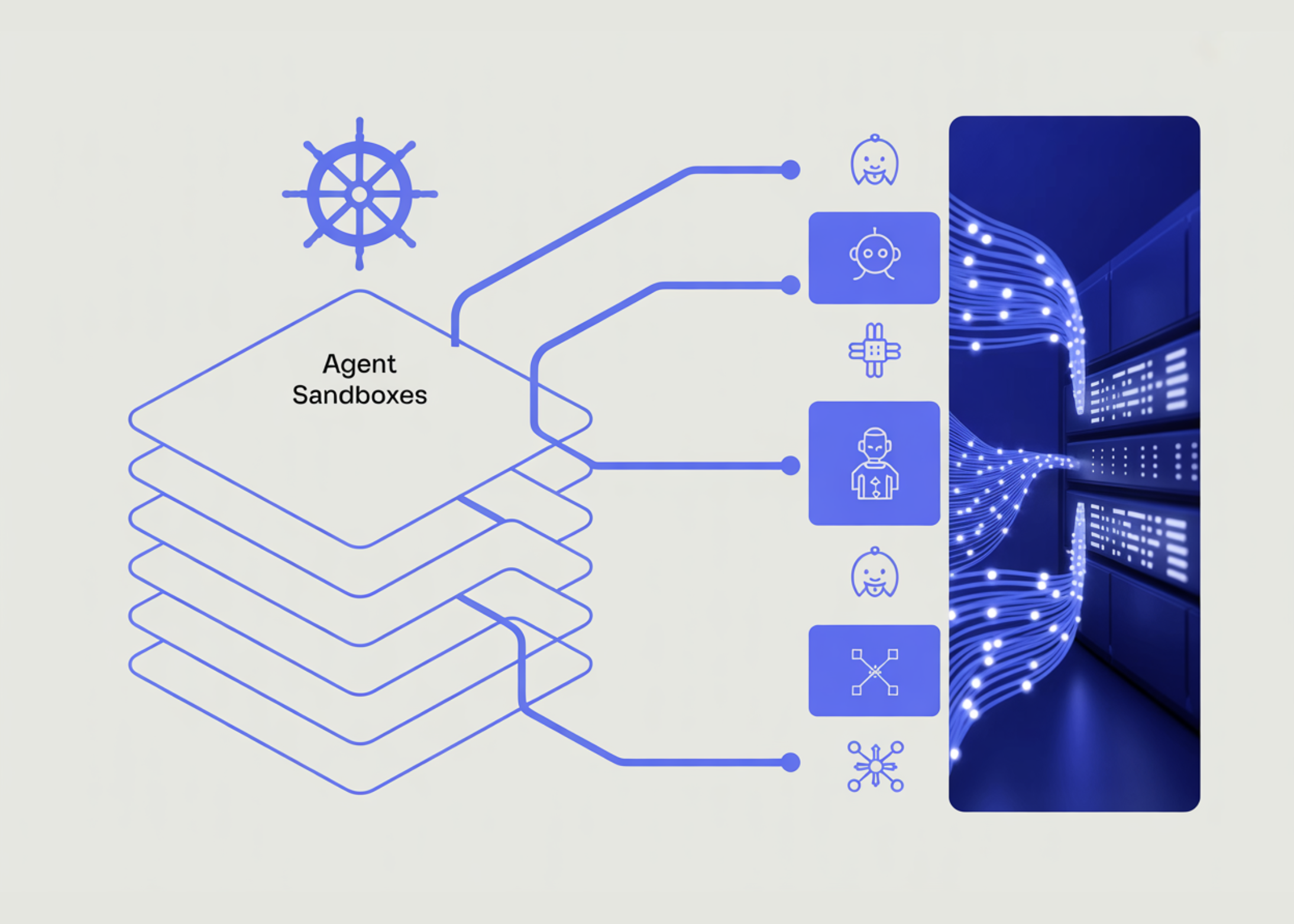
The Silent Killer of Enterprise AI: Stateful Agent Meltdowns
Running basic Large Language Model (LLM) agents in a local Python script is trivial. However, scaling that proof-of-concept into a resilient production system is where most organizations hit a catastrophic wall. Agents are inherently stateful; they rely on preserving session history, tracking complex tool call results, and maintaining interleaved reasoning across multiple turns. When a container running an agent inevitably crashes, restarts due to a rolling deployment, or scales down, that crucial session context vanishes into the ether, leading to catastrophic user experience failures and data loss.
This critical challenge—maintaining state continuity amidst the ephemeral nature of modern container orchestration—has historically required complex, custom-built middleware. Furthermore, enterprise security demands require strict isolation: different teams need distinct runtime environments, proprietary tool access, unique secrets, and rigid scoping rules. Lumping all agents into one giant, shared container is an operational nightmare waiting to happen. BerriAI, the force behind the popular LiteLLM AI Gateway, has just open-sourced the definitive answer: the LiteLLM Agent Platform.
Introducing the LiteLLM Agent Platform: Your Self-Hosted AI Control Plane
The LiteLLM Agent Platform is positioned not just as another wrapper, but as the essential infrastructure layer designed to solve these scaling obstacles head-on. It is a purpose-built, self-hosted infrastructure platform for reliably deploying multiple agents simultaneously in production environments. Its core mission revolves around delivering two fundamental infrastructure primitives: robust per-team/per-context sandboxes and guaranteed session continuity across disruptive events like pod restarts or Kubernetes rolling upgrades.
This platform offers developers the control needed to satisfy both operational efficiency and stringent security requirements. By enforcing isolation at the sandbox level, organizations can safely deploy agents utilizing vastly different dependency sets or accessing highly sensitive credentials without fear of cross-contamination between contexts or different development groups. This delineation is critical for regulated industries attempting to deploy generative AI at scale.
Kubernetes Becomes the Native Runtime for AI Agents
What elevates this platform beyond typical application logic is its deep entanglement with Kubernetes. The isolation layer—the actual runtime environment where agents execute their logic—is managed directly via Kubernetes. Specifically, the platform leverages the kubernetes-sigs/agent-sandbox Custom Resource Definition (CRD). This sophisticated integration means that agent lifecycles, resource allocation, and environment configuration are handled natively by the cluster orchestrator, treating agents as first-class, manageable resources rather than abstract processes running somewhere within a generic container.
For local development and testing, the platform ingeniously integrates kind (Kubernetes in Docker). This allows developers to spin up a fully functional, containerized Kubernetes cluster environment locally using Docker containers as nodes, eliminating the dependency on external cloud provisioning for initial sandbox prototyping. The direct use of a Kubernetes CRD signals a major shift: the future of enterprise AI orchestration necessitates native Kubernetes support for lifecycle management.
The Modern Tech Stack Driving Session Persistence
The architecture itself showcases a clean separation of concerns typical of modern, scalable web services. At its core, the platform features a standalone Next.js dashboard, written overwhelmingly in TypeScript (a staggering 92.8% of the codebase), providing administrators detailed visibility into agent operations, session chats, agent CRUD management, and live status monitoring. This dashboard runs on a dedicated web process listening on port 3000.
Crucially, the state management relies on a robust, persistent backing store: Postgres. All session continuity data—the history and context that prevents session loss—is durable within this database. To ensure the application never starts in a compromised state, schema migration is thoughtfully managed via an init container that runs before the main application boots, guaranteeing the database schema is perfectly aligned with the application’s expectations prior to any web or worker process execution.
The Operational Blueprint: Web, Worker, and Persistence
The platform splits its primary duties across distinct processes. While the web process handles the user interface and management APIs, complex, async agent tasks are delegated to a dedicated worker process. This decoupling prevents long-running or computationally intensive agent execution from blocking the dashboard’s responsiveness, a key scaling necessity. The orchestration layer ensures that when a worker pod fails, the session data it was utilizing remains safely stored in Postgres, allowing a new worker pod to seamlessly pick up the execution thread without session interruption.
The combination of a TypeScript-heavy frontend, Kubernetes native sandboxing via CRDs, Dockerization via a Dockerfile, and robust Postgres persistence paints a mature picture. This is infrastructure built for reliability, moving AI agents from experimental scripts to enterprise-grade services ready for demanding, high-uptime production workloads.
Note: The information in this article might not be accurate because it was generated with AI for technical news aggregation purposes.
Leave a Reply