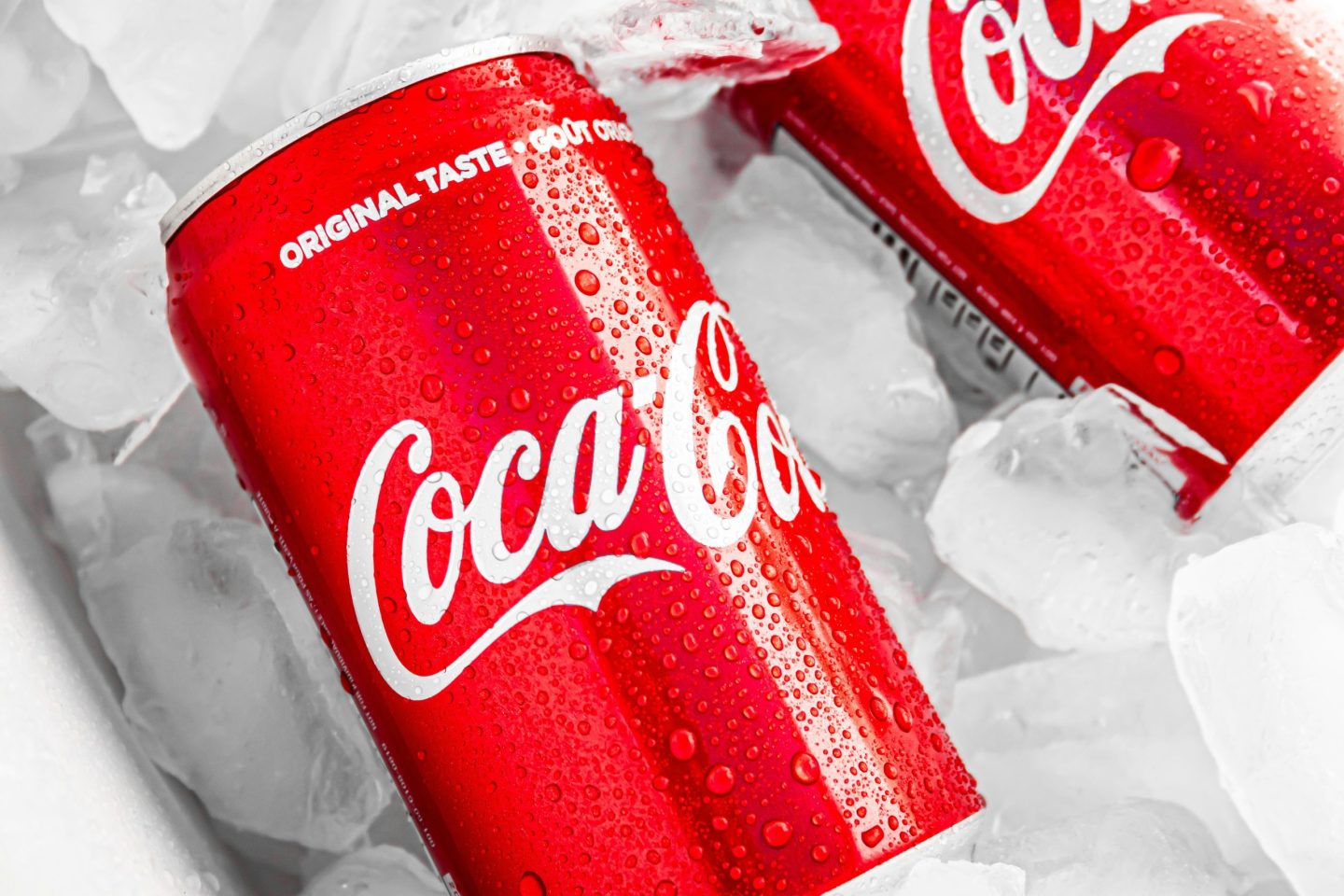
Coca-Cola’s Strategic Pivot as Price-Led Growth Flatlines
For a century, Coca-Cola’s marketing mantra was simple: dominate distribution, out-spend rivals on advertising, and build a brand so ubiquitous it becamesynonymous with refreshment. But as global inflation squeezes consumer wallets and price-led growth strategies reach their limits, the beverage giant is making a radical departure. The company’s current testing of AI-driven ad creation isn’t a side experiment—it’s a central pillar of a new strategy to reclaim growth without further eroding margins. This move signals that generative AI has moved from a novelty for social media posts to a core tool for shaping the identity of the world’s most recognizable brands. The implications for the entire advertising ecosystem, from creative studios to media buyers, are profound and immediate.
The shift is driven by stark financial reality. In recent quarters, Coca-Cola’s volume growth has stagnated in key markets, and raising prices further risks accelerating the decline as consumers trade down to private labels. The traditional agency model, with its high fixed costs and lengthy production timelines for TV and digital campaigns, is increasingly seen as misaligned with a need for rapid, data-driven, and cost-efficient creative iteration. AI offers the promise of generating thousands of ad variants for testing, personalizing messages at a segment level previously unimaginable, and doing so at a fraction of the cost. This is not merely about efficiency; it’s about survival in an attention economy where speed and relevance outperform polished, high-budget production.
Deconstructing the AI Creative Engine: From Prompt to Campaign
The”AI-driven ad creation” being tested by Coca-Cola likely involves a sophisticated pipeline of generative models. Text-to-image models like Midjourney, DALL-E 3, or Stable Diffusion XL would generate visual concepts and final assets based on descriptive prompts that encode brand guidelines, mood, and product placement. Concurrently, large language models (LLMs) such as GPT-4 or Claude would be tasked with generating copy, slogans, and script narratives for video ads. These models are not simply remixing existing content; they are being fine-tuned on Coca-Cola’s historical campaign archives, brand style guides, and successful performance data to produce outputs that are stylistically consistent and legally compliant.
The technical backbone enabling this shift is the drastic improvement in multimodal AI systems and their decreasing operational costs. While the input text does not specify the models used, industry benchmarks like those for creative tasks (e.g., evaluations on HumanEval for code, or more nascent benchmarks for ad copy quality) have shown LLMs with hundreds of billions of parameters approaching human-level fluency. Furthermore, advancements in controllable generation—using techniques like LoRA (Low-Rank Adaptation) for quick model fine-tuning or ControlNet for precise image composition—allow brands to impose strict constraints on color palettes, logo placement, and character likeness. This transforms AI from a chaotic creativity tool into a governed production system, albeit one that still requires human oversight for brand safety and strategic alignment.
The Calculus of Cost: Why the Agency Model Is Under Siege
The economic calculus for a company like Coca-Cola is compelling. A single, high-production TV commercial can cost millions of dollars and take months from storyboard to final cut. An AI-assisted workflow can produce hundreds of variations in the time it takes a human team to conceptualize one. The cost structure shifts from primarily human capital (creative directors, copywriters, editors) to computational resources (GPU inference time, API calls to foundation models). For a global brand that must localize campaigns across 200+ countries, the scalability is irresistible. Instead of a single global ad, they can generate culturally nuanced variants for each market dynamically, testing and optimizing in near real-time.
This creates a cascading threat to the $500 billion global advertising industry. Holding companies like WPP, Omnicom, and Publicis have built empires on the scarcity and expertise of human creative talent. AI democratizes high-volume content creation, potentially reducing the need for large teams of junior copywriters and designers for execution. The value proposition of agencies will be forced to move even further upstream—toward high-level strategy, brand guardianship, and the sophisticated curation and oversight of AI outputs. Agencies that merely execute will find their business model obsolete. The race is on to develop proprietary AI tools and intellectual property that cannot be easily replicated by a client’s in-house team or a cheaper third-party platform.
The Hidden Risks: Bias, Brand Safety, and the “Uncanny Valley”
The rush into AI generation is not without significant peril. Generative models are notorious for amplifying biases present in their training data—data that reflects the world’s stereotypes and cultural tensions. For a brand like Coca-Cola, with a pledge to diversity and inclusion, an AI-generated ad that inadvertently produces offensive or tone-deaf imagery could trigger a global backlash faster than any human-created error. Brand safety becomes a complex technical challenge of prompt engineering, post-generation filtering, and rigorous human-in-the-loop review processes, which themselves add cost and complexity.
There is also the aesthetic and emotional risk of the “uncanny valley.” AI-generated humans and scenarios can feel subtly, unsettlingly off, lacking the genuine human emotion or cultural authenticity that builds brand trust. Consumers may develop a subconscious aversion to content they sense is synthetic, a phenomenon that could erode the authentic, feel-good nostalgia Coca-Cola has meticulously cultivated for over a century. The legal landscape is equally murky, with ongoing debates about copyright for AI-generated works and the potential for models to regurgitate protected material from their training sets. Coca-Cola’s experiment is a live case study in navigating these multidimensional risks.
Industry Earthquake: The Domino Effect Across Sectors
Coca-Cola’s move is a clarion call for every consumer-facing industry. Rivals like PepsiCo, Unilever, and Procter & Gamble are undoubtedly accelerating their own AI marketing initiatives. The impact will be most severe in sectors with high creative output and strict localization needs: fashion, automotive, entertainment, and retail. Marketing technology stacks will be reconfigured around generative AI APIs and workflow automation tools. New specialized roles will emerge, such as “AI Creative Director” or “Prompt Engineer for Brand Voice,” while traditional roles like production artist may decline.
This is the latest frontier in the “AI moving upstream” trend, where the technology transitions from backend operations (customer service chatbots, data analysis) to the front-stage, customer-facing core of the business—the product itself (in this case, the advertisement). It validates the investment thesis of AI companies building foundation models and specialized creative tools. It also suggests a future where brand assets are not static libraries of approved images and copy, but dynamic, algorithmic systems capable of generating on-brand content in response to real-time trends, weather data, or social media moments.
The Road Ahead: Toward a Synthetic Interface Between Brand and Consumer
The ultimate vision hinted at by Coca-Cola’s test is a fully automated, adaptive marketing machine. Imagine a system that monitors global social sentiment, identifies a nascent trend (e.g., a viral dance move), checks product inventory, generates a suite of compliant ad concepts featuring that trend, A/B tests them across micro-audiences, and deploys the winners—all within hours. The brand’s interface with the consumer becomes a continuous, generative dialogue rather than a series of monologues.
This future demands new frameworks for measuring creative effectiveness. Traditional metrics like recall and appeal may be joined by assessments of “AI-coherence” and “brand fidelity” across thousands of synthetic variants. The creative hero—the lone genius copywriter or art director—may become a curator of systems and a validator of outputs. For Coca-Cola, success means not just cheaper ads, but more relevant, timely, and effective ones that can reignite growth. For the industry, it represents the most significant structural disruption since the advent of digital advertising. The brands that master this synthesis of human strategy and AI execution will define the next era of marketing; those that don’t risk becoming irrelevant in a feed of synthetic content.
Note: The information in this article might not be accurate because it was generated with AI for technical news aggregation purposes.
Leave a Reply