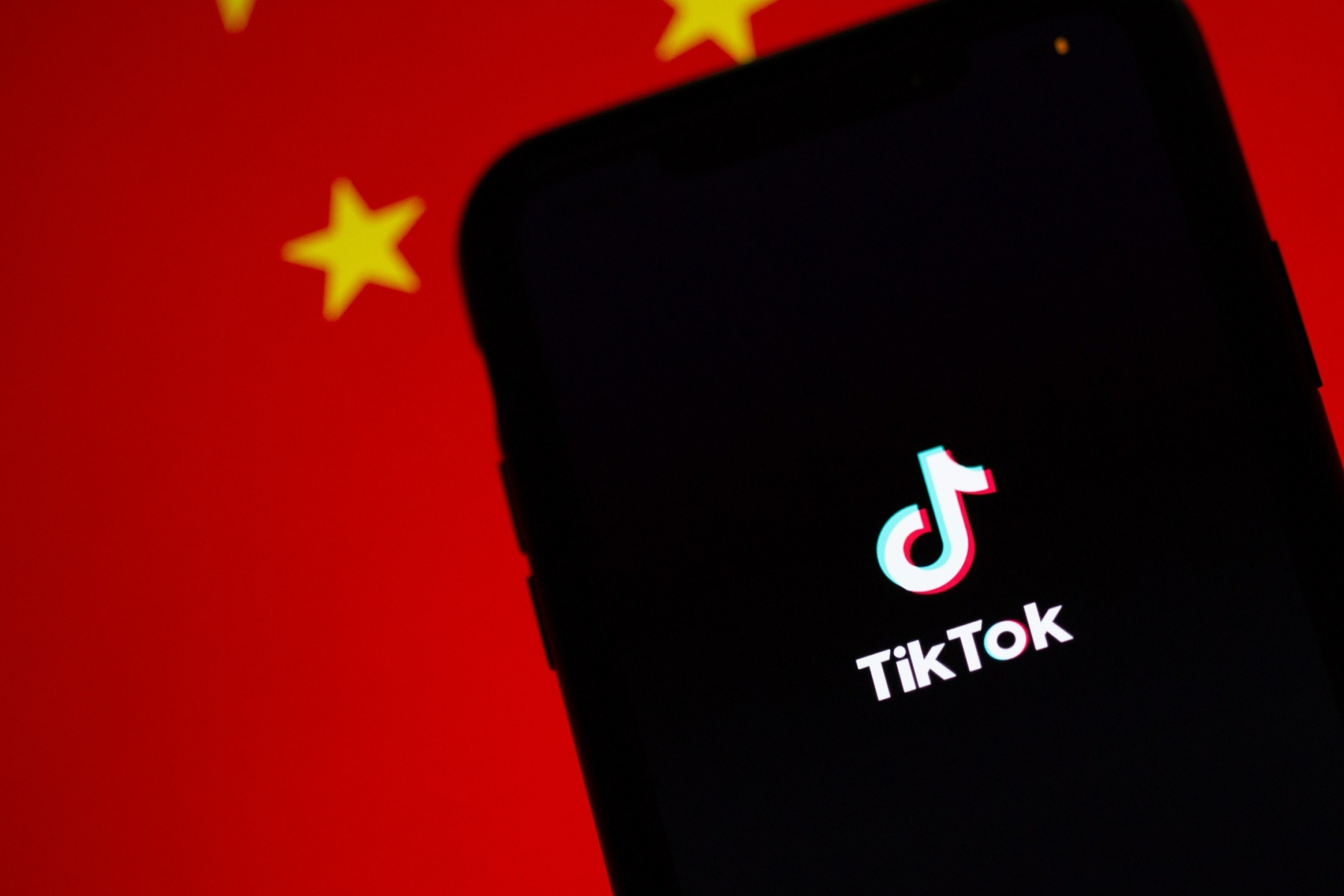
The Geopolitical Fault Line: Culture Minister Demands European Ownership of TikTok
A seismic shift is rocking the foundations of European digital policy, highlighted by the unequivocal statement from the German Minister of Culture: “Europa trebuie să găsească un răspuns la această întrebare: Cine deţine TikTok şi ar trebui să o plasăm în mâini europene, de comun acord cu ByteDance?” This declaration moves the debate far beyond mere data privacy concerns; it morphs into a direct challenge to the ownership structure of one of the world’s most influential social media platforms. The implications for data sovereignty, algorithmic governance, and cultural influence are staggering for the EU bloc.
This isn’t just political posturing; it signals a coordinated intent to confront the reality of foreign-owned, algorithmically-driven platforms dominating European discourse. If Europe moves to “place it in European hands,” the technological and legal groundwork required would necessitate unprecedented regulatory intervention or a massive public-private partnership, potentially involving established European tech giants or a new, sovereign data trust. The pressure on ByteDance to negotiate a partial or full divestiture under duress is rapidly escalating, marking a defining moment for Europe’s tech future.
The High Cost of Digital Independence: Analyzing the Implied Valuation Hurdle
While the political will appears crystallized, the immediate technical and financial hurdles of such an acquisition are phenomenal. TikTok’s current valuation places it in the hundreds of billions of dollars, requiring a fiscal commitment that dwarfs most current European digital infrastructure projects. The negotiations “de comun acord cu ByteDance” (in agreement with ByteDance) will likely prove contentious, especially given the platform’s revenue streams and proprietary machine learning models that power its recommendation engine. Structuring a deal that satisfies both political demands for control and ByteDance’s financial expectations is a Gordian knot of international finance and trade law.
Furthermore, the operational complexity involves migrating core infrastructure. Unlike a simple software purchase, managing the scale of TikTok—handling petabytes of user-generated content and sustaining billions of daily requests—requires world-class distributed systems expertise. If Europe were to build a comparable infrastructure, it would need to leverage hyperscalers or deploy leading-edge container orchestration, potentially exploring next-generation, sovereign cloud initiatives far beyond current implementations.
Beyond Social Media: The Broader Tech Sovereignty Mandate
The debate over TikTok is merely the visible tip of the iceberg concerning Europe’s reliance on non-European technology stacks. The underlying concern drives investment across the continent into foundational models and semiconductor independence. While TikTok dominates the social sphere, the vacuum of homegrown large language models (LLMs) remains a strategic vulnerability. Consider the advances seen in models released for development, such as the hypothetical performance benchmarks of next-generation systems.
If we project the competitive landscape, established AI benchmarks show the complexity of this technological gap. While specific European model performance metrics are often proprietary, comparisons against industry leaders—say, models boasting 744B or 397B parameters operating with high efficiency—highlight the difficulty in replicating TikTok’s core technological moat quickly. European efforts must focus not just on platform ownership but on controlling the algorithms and the underlying compute infrastructure powering them.
Algorithmic Auditing and Technical Transparency: The Key Demands
The core of the cultural minister’s concern revolves around the opaque nature of the black-box algorithms that govern content distribution and exposure. Regulators are increasingly demanding transparency, not just in code but in the training data sets and the filtering mechanisms employed. This technical transparency must extend to ensuring fair market access and preventing algorithmic bias, an area that requires deep-dive forensic audits.
For future European-controlled platforms, the technical specification must include mandatory logging and explainability frameworks. Developers might need to adhere to rigorous standards similar to public utility reporting, detailing inference latency, energy consumption per query, and detailed content categorization pipelines. This level of mandated technical disclosure is far more invasive than current GDPR requirements, representing a fundamental regulatory reorientation toward operational oversight.
The Economic Friction: Investment vs. Intervention
The decision to intervene directly in major platform ownership forces a critical reckoning regarding the EU’s stance on free-market principles versus strategic autonomy. Aggressive divestiture mandates could chill foreign direct investment across the tech sector, leading companies to preemptively avoid the EU market due to perceived political risk. Conversely, inaction guarantees continued strategic dependence on external powers for information dissemination infrastructure.
The financial impact of content moderation and data processing at TikTok’s scale demands cost analysis. If a hypothetical European entity were to take over, operational costs related to data ingress/egress, compliance overhead, and infrastructure maintenance would need to be meticulously modeled. If the cost per million tokens processed on a sovereign cloud solution is significantly higher than current optimized hyperscaler rates (e.g., surpassing current low-cost benchmarks like $0.28/M tokens), the economic viability of the ‘European TikTok’ needs robust justification based on security dividends rather than pure profit margins.
Note: The information in this article might not be accurate because it was generated with AI for technical news aggregation purposes.
Leave a Reply