What is Ollama and Why Version 0.17 is a Milestone
Ollama, the open-source platform that has become synonymous with effortless local deployment of large language models (LLMs), has just released version 0.17. This update is not merely incremental; it focuses on revolutionizing how users engage with OpenClaw, a pivotal benchmark in the AI community. By streamlining the onboarding process, Ollama is removing barriers that have long hindered widespread adoption of rigorous model testing. For years, running benchmarks like OpenClaw required complex setups, deterring many from participating in the essential task of model evaluation. Now, with a few commands, developers can integrate OpenClaw into their workflow, fostering a culture of transparency and accountability in AI development.
The significance of this move cannot be overstated. As AI models grow more sophisticated, with parameter counts soaring into the hundreds of billions, the need for standardized, accessible evaluation tools is critical. Ollama 0.17 addresses this by making OpenClaw—a benchmark known for assessing reasoning and problem-solving capabilities—available out-of-the-box. This means that whether you’re testing a small model or a large-scale model, the process is uniformly simple. Such democratization ensures that performance metrics are not confined to well-funded labs but are within reach of individual researchers and small teams, thereby enriching the collective understanding of model capabilities.
Demystifying OpenClaw: The Benchmark That Matters
OpenClaw has emerged as a cornerstone for evaluating AI systems, particularly in areas requiring multi-step reasoning and environmental interaction. Unlike traditional benchmarks that focus on static question-answering, OpenClaw often involves dynamic scenarios—such as navigating game environments or solving complex puzzles—that better mimic real-world problem-solving. This makes it invaluable for assessing the true intelligence of models beyond mere pattern recognition. In recent iterations, OpenClaw has been adopted in suites like ARC-AGI-2 and SWE-bench, where models must demonstrate agency and long-horizon planning. Scores on OpenClaw are increasingly seen as predictors of real-world applicability, with top performers often setting high accuracy bars in specific tasks.
The integration of OpenClaw into Ollama means that these high-stakes evaluations are now frictionless. Previously, setting up OpenClaw required manual configuration of dependencies, environment variables, and data pipelines—a daunting task for many. Ollama 0.17 automates this, offering pre-configured templates and one-line setups. This shift from obscurity to accessibility is akin to what Docker did for software containers: it standardizes and simplifies, allowing the focus to remain on the models themselves rather than the tooling. As a result, we can expect a surge in OpenClaw results from diverse models, providing a more granular view of the AI landscape and accelerating the identification of both breakthroughs and flaws.
Technical Breakdown: What’s New in Ollama 0.17?
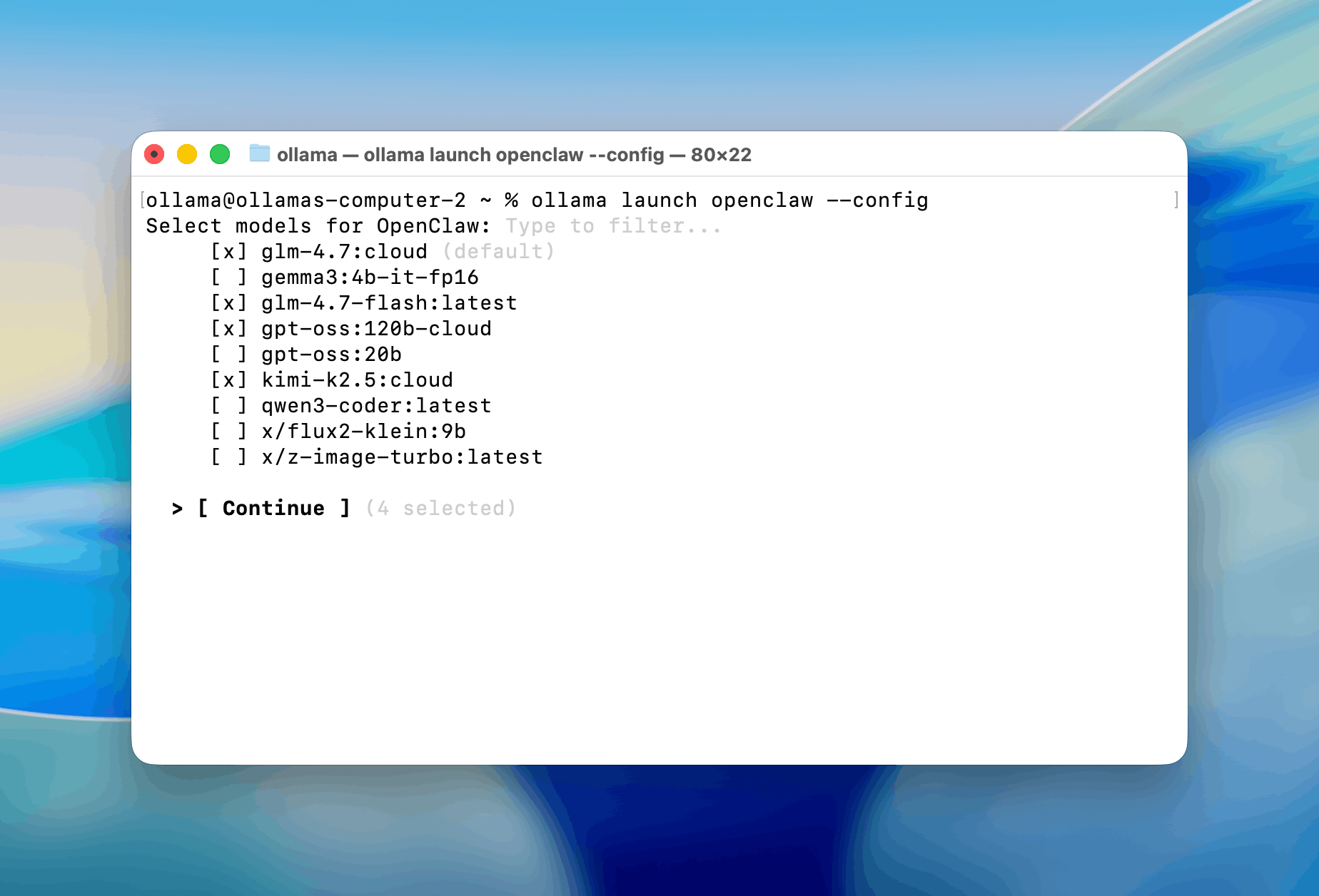
Under the hood, ollama 0.17 introduces several key improvements tailored for OpenClaw onboarding. The most notable is the inclusion of native OpenClaw manifests in the Ollama model library. These manifests define the exact versions of OpenClaw components—such as the benchmark runner, environment wrappers, and evaluation scripts—ensuring consistency across installations. Additionally, the update enhances the CLI with new commands like the ollama benchmark openclaw command which automatically downloads the necessary assets, configures the environment, and executes the benchmark with optimal settings for the host system. This reduces setup time from hours to minutes, even on modest hardware.
Beyond convenience, the update addresses performance bottlenecks. Ollama now dynamically adjusts GPU memory allocation for OpenClaw runs, preventing common out-of-memory errors that plague large model evaluations. It also introduces parallelized data loading, cutting down iteration times for repeated testing. For developers, this means faster feedback loops: you can tweak a model and rerun OpenClaw in the time it previously took to set up once. Such efficiency is crucial for iterative development, especially when working with large-scale models, where each run can be computationally expensive. Moreover, the improved logging and reporting features provide clear, actionable insights, highlighting where models falter in OpenClaw’s complex scenarios.
Why This Matters for AI Developers and Researchers
For the everyday AI developer, ollama 0.17’s OpenClaw integration is a paradigm shift. It eliminates the technical debt associated with benchmark maintenance, freeing up valuable time for model innovation. Researchers can now run comparative studies across multiple LLMs with unprecedented ease, generating statistically significant results without infrastructural headaches. This is especially beneficial for academia and open-source projects, where resources are limited. By lowering the entry barrier, Ollama encourages more participants in the benchmarking ecosystem, leading to a more diverse set of evaluations and, ultimately, more robust models. The implication is a faster pace of iteration and discovery, as good ideas can be validated quickly against OpenClaw’s rigorous tests.
On the commercial side, companies can leverage this to conduct internal assessments of models before deployment. With OpenClaw readily available, teams can simulate real-world challenges and gauge model reliability under pressure. This ties into the growing trend of AI governance and responsible AI, where transparent benchmarking is becoming a regulatory expectation. Ollama’s move positions it as an enabler of compliance, helping organizations meet standards that might soon require documented performance on benchmarks like OpenClaw. In essence, version 0.17 is not just a tool update; it’s a strategic asset for anyone serious about AI quality assurance.
The Bigger Picture: Open Source vs. Proprietary AI Ecosystems
Ollama’s emphasis on OpenClaw onboarding is a shot across the bow of proprietary AI platforms. While giants like OpenAI and Anthropic offer polished APIs, their evaluation suites are often opaque or restricted. OpenClaw, being open-source, represents a counter-movement: community-driven, transparent, and accessible. By integrating it deeply, Ollama strengthens the open-source stack, providing an alternative where developers own both the model and the evaluation framework. This aligns with a broader shift towards sovereignty in AI—organizations want to avoid vendor lock-in and maintain control over their data and metrics. Ollama 0.17 makes this feasible by handling the complexity, so users don’t have to choose between convenience and freedom.
Moreover, this release highlights the maturation of open-source tooling. Projects like Ollama are bridging the gap that once existed between cutting-edge research and practical deployment. With OpenClaw just a command away, the feedback loop between benchmark creators and model trainers tightens. Innovations in benchmark design can be rapidly adopted and tested, driving a virtuous cycle of improvement. In contrast, proprietary ecosystems often lag in incorporating new evaluation methods due to internal priorities. Thus, Ollama’s update could spur a renaissance in benchmarking, with OpenClaw leading the charge. As AI continues to evolve, such tools will be pivotal in ensuring that progress is measured fairly and comprehensively.
Looking Ahead: The Future of AI Benchmarking with Ollama
What’s next for ollama and OpenClaw? The roadmap likely includes deeper integrations, such as automated model optimization based on OpenClaw feedback, or cloud-native extensions for scalable benchmarking. There’s also potential for OpenClaw to expand into new domains, like multi-modal reasoning or embodied AI, and Ollama will undoubtedly keep pace. This release sets a precedent: future versions may seamlessly incorporate other key benchmarks like ARC-AGI-2 or SWE-bench, creating a one-stop shop for all evaluation needs. For users, this means staying with Ollama is staying at the forefront of AI tooling.
Ultimately, ollama 0.17 is more than an update; it’s a statement. It declares that high-quality AI evaluation should be effortless and open. By taming the onboarding process for OpenClaw, Ollama empowers a wider audience to participate in the crucial work of measuring AI progress. As the industry grapples with questions of performance, safety, and ethics, tools that provide clear, standardized benchmarks will become indispensable. This release is a step toward that future, where every developer can contribute to a common understanding of what AI can and cannot do. The revolution in AI benchmarking is quietly underway, and Ollama is holding the torch.
Note: The information in this article might not be accurate because it was generated with AI for technical news aggregation purposes.
Leave a Reply